Community settlement · Ma'ale Yosef Regional Council · Northern District · founded 1980
Hila by the numbers
A highly educated, car-dependent and affluent town
Hila has 464 residents (CBS estimate, December 2024). Compared with the 930 other small towns, it has more graduates than 87% of them, fewer car-free households than 87% of them and smaller households than 77% of them.
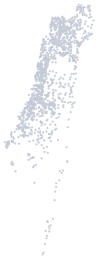
How does Hila compare with other towns?
Hila Another of the 931 towns with under 2,000 residents
ShowHide
How does Hila compare with other towns?
Hila Another of the 931 towns with under 2,000 residents
How educated?
Can you live without a car?
How much do people earn?
Big families?
2 more comparisonsLess
Do people rent or own?
Young or old?
Sources: age: CBS 2022; education, renting, cars and household size: the 2022 census, the only source at town level. Compared with the 931 towns with under 2,000 residents.
What is the average salary in Hila?
₪15,730 a month for the average employee, 4% higher than the national average; socio-economic cluster 8 of 10; a 12% income tax credit
Wages 2025
ShowHide
What is the average salary in Hila?
₪15,730 a month for the average employee, 4% higher than the national average; socio-economic cluster 8 of 10; a 12% income tax credit
Wages 2025
4% above the national average.
Ranked 788 of 996 communities in regional councils (1 is the lowest).
Wages: National Insurance Institute, 2025, average for Ma'ale Yosef Regional Council. Tax benefit: Israel Tax Authority list of eligible towns for 2026. Cluster: CBS socio-economic index 2021, the latest (published in 2024).
Schools and kindergartens in Hila
0 schools, 1 kindergarten and 1 daycare centre
ShowHide
Schools and kindergartens in Hila
0 schools, 1 kindergarten and 1 daycare centre
Source: Ministry of Education, list of active institutions
Who lives in Hila?
29% are under 18 (less than the national share); the largest health fund is Clalit
As of October 2026
ShowHide
Who lives in Hila?
29% are under 18 (less than the national share); the largest health fund is Clalit
As of October 2026
These figures are for Ma'ale Yosef Regional Council as a whole.
Age groups
Under 18Working age (18–65)65+
Health funds (kupot holim)
ClalitMaccabiMeuhedetLeumit
Source: National Insurance Institute, statistics by town (ages as of October 2026). Benefit rates are shares of all residents.
How does Hila vote?
Largest list: Yashar (38%). Turnout 70%
Election for the 26th Knesset
ShowHide
How does Hila vote?
Largest list: Yashar (38%). Turnout 70%
Election for the 26th Knesset
In the 2026 election, Hila voted The Democrats more than the country as a whole (+24 points) and Likud less (-14).
In 2022 the largest list here was Yesh Atid (50%).
Hila All Israel
Source: Central Elections Committee, 26th Knesset election (2026), via the Kaplan Open Source mirror (official results by locality). Compared with the 25th Knesset (2022)
How much is arnona (property tax) in Hila?
About ₪293 a month for a 90 m² apartment, less than most local authorities
Audited accounts 2024
ShowHide
How much is arnona (property tax) in Hila?
About ₪293 a month for a 90 m² apartment, less than most local authorities
Audited accounts 2024
A 90 m² apartment in Ma'ale Yosef Regional Council pays about ₪293 a month in arnona on average (₪3,510 a year).
Of every shekel the authority spends, 50 agorot go to education and 11 agorot to welfare.
Source: Ministry of the Interior, audited financial reports of local authorities for 2024, Ma'ale Yosef Regional Council. Actual arnona depends on the zone and type of property.
Towns like Hila, and nearby
Most similar: Palmahim, Shefayim, Magal
ShowHide
Towns like Hila, and nearby
Most similar: Palmahim, Shefayim, Magal
Similar in wages, education, age, renting, car ownership, household size and population mix.
Closest on the map
- Mi'elya1.6 km
- Goren2.4 km
- Gornot HaGalil2.7 km
- Me'ona2.7 km
- Ein Ya'akov3.3 km
- Elon3.9 km
Hila: common questions
ShowHide
Hila: common questions
What is the population of Hila?
Hila has 464 residents, according to the CBS estimate for December 2024.
How many schools are there in Hila?
Hila has 0 schools, 1 kindergartens and 1 daycare centres, according to the Ministry of Education.
What is the average salary in Hila?
The average monthly wage per employee in Ma'ale Yosef Regional Council is ₪15,730, against ₪15,140 nationwide (National Insurance, 2025).
Is there a tax benefit for living in Hila?
Yes. In 2026, residents of Hila get an income tax credit of 12% on personal-exertion income of up to ₪213,240 a year.
Which district is Hila in?
Hila is in the Northern District, in the Ma'ale Yosef Regional Council, Acre subdistrict.
Data sources
- Provisional population estimates by locality, Central Bureau of Statistics (CBS)
- Localities file 2024, Central Bureau of Statistics (CBS)
- Residents aged 65+ in localities of 5,000+, 2024, Central Bureau of Statistics (CBS)
- 2022 Census: selected data by locality (latest census), Central Bureau of Statistics (CBS) · updated June 2024
- Crime data 2025, Israel Police · updated April 2026
- 26th Knesset election results (October 2026) by locality, via the Kaplan Open Source mirror, Central Elections Committee
- 25th Knesset election results (2022) by locality, Central Elections Committee · updated September 2024
- Sale prices and rents by locality (Nadlan), Israel Tax Authority
- Statistics by locality: wages, ages, health funds and benefits, National Insurance Institute (Bituach Leumi)
- Localities eligible for income-tax benefits, 2026, Israel Tax Authority · updated January 2026
- Socio-economic index 2021 of authorities and localities (published 2024, the latest), Central Bureau of Statistics (CBS)
- Audited financial reports of local authorities, 2024, Ministry of Interior
- Educational institutions, Ministry of Education · updated October 2026
- Public transport stops, Ministry of Transport · updated October 2026
CBS locality code: 1208